What Happens When You Tell Your Dog “Sit”?
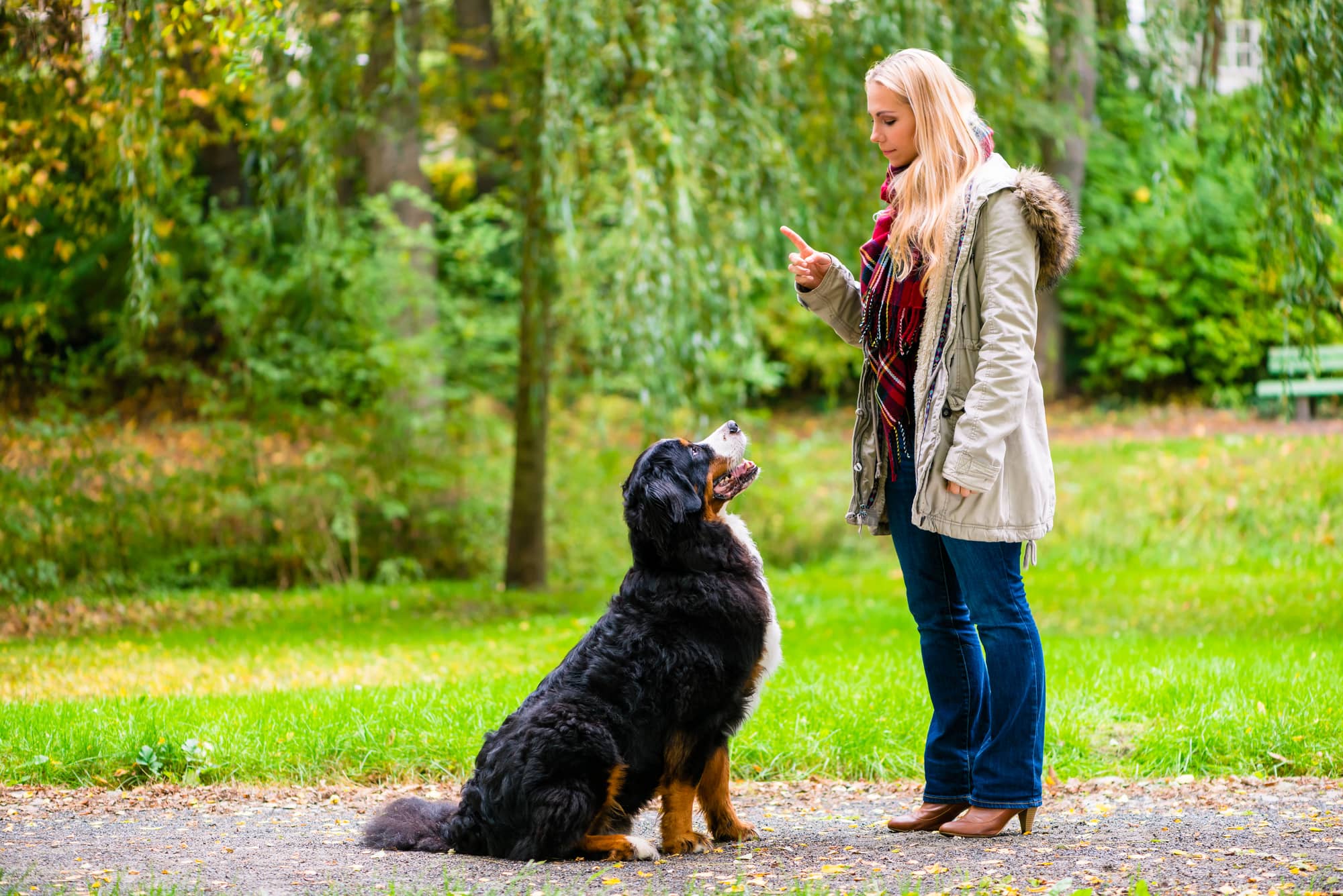
I will bet for many of you your dog will sit …
- If he has nothing better to do.
- If you have a treat in your hand and he is hungry.
- If he his already paying attention to you.
- If he is in a controlled environment.
What happens after the sit command?
Does your dog remain in the sit position until you release him?
If you are like most people, the answer is no.
Your dog very possibly may sit if the “conditions are right”. But as soon as he wants, he breaks the command and goes back to doing what he wants. And you let him.
Don’t feel bad.
If you fit in this category, you are probably one of millions that do not have true control over your dog.
And … you are not your dog’s true leader. Think about that. If you were, he would stay in the command until you release him.
Ever wonder why he doesn’t listen to you?
- He doesn’t think you mean it.
- He doesn’t think you will make him.
- He doesn’t think you can make him do it.
Stay tuned and we will teach your dog to remain in the sit command until you release him … because you are the leader.
Feb 10, 2007 | | Dog Training
This comment reply is specifically for “artjams” who posted this comment under “Hello World”. It was a comment made on the “Should You Be Playing Tug With Your Dog” post. The comment section should now be open for future moderated comments.
Artjams commented on 1/19/07:
My sister and her family have a white boxer. He constantly jumps on me when I come to visit. He wants to play tug with many of his toys and he always wins. He is stronger than me as I have asthma. I can win if I do it quickly, but he wants to paly over & over. If I stop and don’t pay attention to him, he will growl and won’t stop growling & barking. He’s demanding that I play with him. If I tell him no, he doesn’t stop. If I get up and move towards him, he runs away barking & comes back when I turn my back or attention away from him to start all over again. I’ve tol my sister, mother, and nephews that they need to train him and that this behavior is dangerous. They just don’t get it. I must go there to visit my mother who is 84 years old and I worry about her. What should I do?
First things first. Here is a perfect example of a dog or pet owner who is not aware of their pet’s impact on visitors. I will post more on this topic later.
There are a few things that I do not know here, such as age and the boxer’s role in the family (although I could surmise this). I also do not know the inter-family relationships when visitors are not present.
The boxer is probably an adolescent as it appears he is still exploring his boundaries … to see how far he can go. The continuous playing and pushing his will on you is a prime example of this. The growling and barking can possibly be a precursor to more exaggerated actions if he doesn’t get his way. It is hard to say without properly evaluating him.
My recommendation for you is not to play tug with him at all. Without realizing it, you are perpetuating this action by playing with him. The next thing you are doing is continuing to play with him when you want to quit. The boxer can’t make you play with him. You make that choice.
Don’t play with him and ignore him when he tries to initiate the game. Do not stare at him. Avoid his eye contact. If he is being good, praise him by petting him and speaking to him in a calm voice. That’s it. That is all you can and should do.
This behavior with you will not stop overnight, but it will eventually diminish and should stop if you are persistent.
As far as your grandmother goes, you can only bring this to your sister’s attention. I would assume this behavior is not present with your grandmother. If it is, implore your sister and her family to speak to a professional dog trainer or behaviorist.
I hope this helps. Since I am not there to evaluate this boxer I can only provide general suggestions. I would suggest to every dog owner to always get professional training and guidance.
Jan 20, 2007 | | Dog Behavior, Dog Training
Who is the leader of your dog pack?
Can you take your dog for a walk without being dragged down the street? If not, you are probably not the leader of your dog pack.
When someone comes to the door, who greets them first? If you answer your dog, you are probably not the leader of your dog pack.
If you give your dog a command, does he or she do it? If not, you are probably not the leader of your dog pack.
If you give your dog a command and he/she obeys, does your dog remain in that command until you release them? If not, you are probably not the leader of your dog pack.
When you go out the door with your dog, who goes first? If your dog goes first, you are probably not the leader of your dog pack.
If you play tug with your dog, who wins? If your dog wins and keeps the toy, you are probably not the leader of your dog pack.
Does your dog jump on you? If so, you are probably not the leader of your dog pack.
When your dog comes to you to get petted (physically putting himself in a position to get petted), do you pet him. If you do, you are probably not the leader of your dog pack.
Does your dog eat when it wants to? Does he/she get fed before you do? If so, you are probably not the leader of your dog pack.
Does your dog sleep with you or gets on the furniture without permission? If so, you are probably not the leader of your dog pack.
Does your dog mark his/her territory in your home? If so, you are probably not the leader of your dog pack.
Has your dog ever growled at you? If so, you are probably not the leader of your dog pack. Note: If so, you need professional help or someone may get hurt.
Notice the word “probably” above.
Any one of those items by themselves (and countless other examples where your dog seems to be in a controlling position) does not necessarily mean you aren’t the leader.
A combination of them does increase the likelihood that your dog thinks he or she is the leader … regardless of what you think.
Your dog should not lead your pack. You should.
In some situations, nothing will happen except you will have a spoiled dog. In other situations, it can lead to someone getting hurt or bit. Just because you have a spoiled dog now does not mean it cannot get worse.
As long as your dog is not aggressive at this moment, I can help start providing little suggestions to improve your life with your dog.
There is one caveat.
Do not start taking control unless you mean to see it through. If you lack the will power and fail, you will be doing nothing but confirming to the dog that he/she is the leader … just like in the dog pack or wolf pack in the wild.
We can’t treat dogs like humans. They do not understand this. We have to communicate with them on their level.
If you are interested, stay tuned.
Dec 29, 2006 | | Dog Behavior, Dog Training, General Pet Info